
Quick answer: Awnings should be inspected and cleaned twice a year — once in spring before peak UV season and once in early fall. In Los Angeles County, the main threat is coastal humidity and mildew; in Nevada, it's UV degradation and dust in the seams. A five-point check (fabric, seams, motor/arms, hardware, and buildup) catches most failures while they're still a quick fix instead of a full replacement.
Introduction
Awning damage rarely starts as a dramatic tear. It usually begins as something small: a stiff arm nobody's tested since last year, or a seam that's been quietly working loose. Catching those issues in spring — before the region's UV index climbs into the "extreme" range — is dramatically cheaper than a mid-July emergency repair.
At The Awning Cleaners, serving Los Angeles County and Nevada (Las Vegas, Henderson, Reno), this is the conversation we have with homeowners and business owners every spring. Below is our updated 2026 checklist, along with the regional climate data that explains why LA and Nevada awnings fail differently — and how to plan around it.
Why Timing Matters: 2026 UV & Climate Snapshot
Sun exposure is the single biggest driver of awning wear in both regions, but the numbers look different depending on where you live:
| Metric / Maintenance Area | Los Angeles County | Las Vegas / Southern Nevada |
|---|---|---|
| Climate Snapshot | Coastal humidity and marine layer moisture | Extreme UV and ultra-dry desert conditions |
| Peak Summer UV Index | 10–11 (May–Oct) | 9–11 (Apr–Sep) |
| Peak UV Month | June–July | July |
| Summer Humidity | 50–70% (Marine layer dew points 65–70°F) | 10–20% (Ultra-dry desert environment) |
| Fabric Lifespans — Acrylic Fabric | 10–15 years (with biannual cleaning) | 8–12 years (shortened by heavy UV load) |
| Fabric Lifespans — Vinyl-Coated Fabric | 15–20+ years (highly moisture-tolerant) | 5–8 years (stiffens & cracks in dry heat) |
| Primary Threat | Mildew, mold & trapped shade moisture | UV brittleness, fading & seam dust accumulation |
| Cleaning Schedule | Biannual cleanings (Spring & Post-Marine Layer) | Pre-summer prep (March–April) & July UV check |
Key Action Items
- Air-dry before rolling up retractables.
- Treat shaded/north-facing areas for mold.
- Check water-repellent sealants every 2–3 yrs.
- Flush grit & dust out of seams regularly.
- Apply UV protectant/softeners to vinyl.
- Inspect monthly for fabric stiffness/cracks.
The Essential 5-Point Awning Inspection Checklist
Run through these before the heat hits:
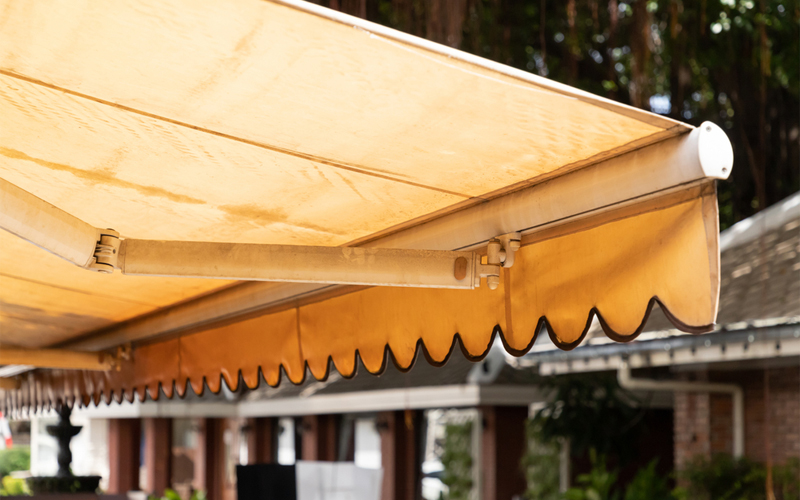
- Fabric Condition Run your hand across the surface. Fading, stiffness, or a "crispy" feel means UV has already started breaking down the fiber bonds — that's the point where fabric goes from repairable to tear-prone. Small tears caught now are a patch; the same tear in August is a full panel replacement.
- Seam Separation Check every corner and stitched edge. Seams take the most mechanical stress every time the fabric moves in wind, so they're almost always the first failure point — especially in dusty desert conditions where grit works its way into the stitching over winter.
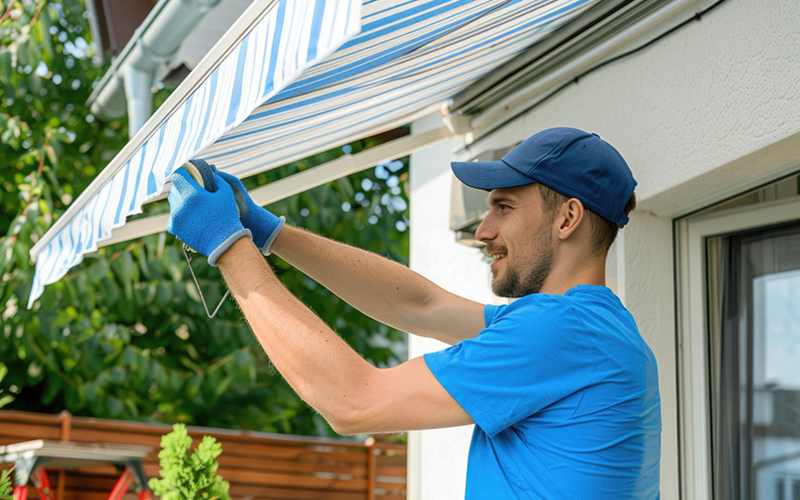
- Mechanical Arms & Motor Health Fully extend and retract the awning at least once. A motor that hesitates, or an arm that catches partway through its travel, is a small fix in April and a stuck-open (or stuck-closed) awning during a July heat wave.
- Mounting Hardware & Structural Anchors Inspect brackets, bolts, and anchors for rust, looseness, or signs of pulling away from the wall. Once movement shows up at the mounting point, it's a structural issue, not a cosmetic one.
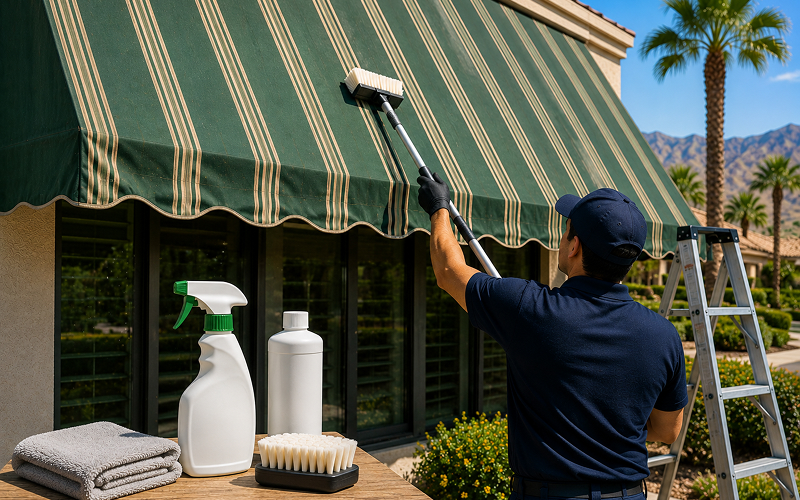
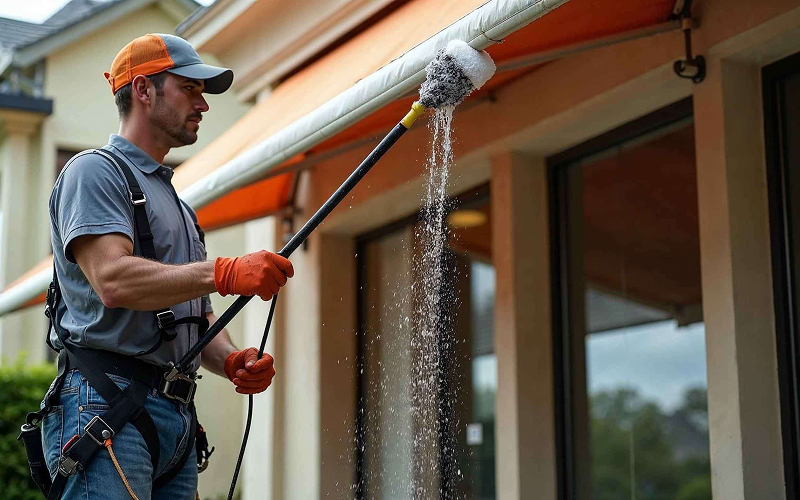
- Dirt, Mildew & Grime Buildup Dust, pollen, and any mildew that formed over the cooler months needs to come off before summer heat bakes it permanently into the fabric. This step alone is the difference between a fabric that still looks new at year eight and one that looks worn by year three.
None of these take long individually. Skipping all five for a year is exactly how a small tear becomes a torn-off panel mid-July.
Regional Maintenance Guide: LA County vs. Nevada
A simple, repeatable awning maintenance checklist beats an elaborate one. Most awnings only need this level of attention once or twice a year — consistency matters more than intensity. What belongs on that checklist, though, depends heavily on climate.
Los Angeles County: Coastal Humidity & Mildew Control
Marine layer moisture is the dominant risk. Coastal dew points have been running higher in recent summers, which means fabric — especially on shaded, north-facing installations — stays damp longer and is more prone to mildew spores that spread quickly once established. A thorough cleaning pass before peak heat arrives prevents that moisture from baking permanently into the weave once temperatures climb.
LA-specific priorities:
- Deep-clean before June to remove any mildew that formed during spring marine-layer season.
- Prioritize breathable, mildew-resistant fabrics (solution-dyed acrylic) for shaded or north-facing installs.
- Check for water pooling near seams after any rain — trapped moisture is the #1 accelerant for coastal awning damage.
Nevada: UV Degradation & Dust Damage
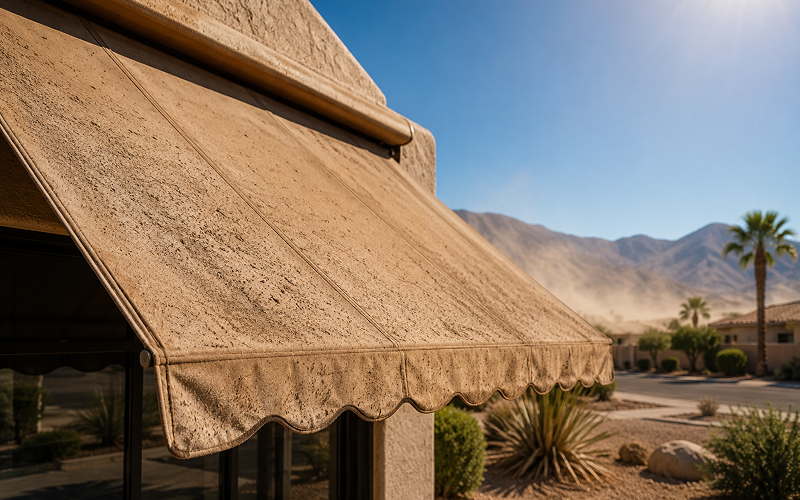
Dust and extreme UV exposure are the defining risks in the Las Vegas Valley, where summer UV routinely reaches the "extreme" category (9–11) and humidity can drop below 15%. Fabric here fades and stiffens faster than in milder climates, so the pre-summer check is less about mildew and more about catching brittleness before it turns into a tear.
Nevada-specific priorities:
- Clear dust out of seams and folds before summer — it works into the material and accelerates seam separation.
- Retract awnings during dust storms and high-wind events to limit fabric flex-fatigue.
- Budget for fabric replacement sooner than the national average — even premium acrylic tends toward the lower end of its lifespan range in desert sun.
Awning Fabric Lifespan by Material (2026 Reference Table)
| Fabric Type | National Average Lifespan | Nevada (Desert) Lifespan | LA County (Coastal) Lifespan |
|---|---|---|---|
| Solution-dyed acrylic (Sunbrella-class) | 10–15 years | 8–12 years | 10–15 years |
| Vinyl-coated polyester | 15–25 years | 5–8 years | 15–20 years |
| Standard polyester (uncoated) | 5–8 years | 3–6 years | 5–8 years |
| Aluminum/steel frames | 20–30 years | 20–30 years | 20–25 years (watch for coastal corrosion) |
Frequently overlooked detail: the thread holding an awning together often fails before the fabric does. Standard polyester thread can degrade in as little as 3–5 years under intense UV, even when the fabric panel itself still looks fine — one more reason a professional inspection catches problems a visual glance from the ground would miss.
Priority Action Steps Before Summer
- Full clean — remove everything that built up over the cooler months before it bakes into the fabric.
- Full retraction/extension test — confirm the motor and arms move smoothly through their entire range.
- Close inspection of any seam that's shown wear before — seams rarely fail without warning signs first.
Set a fixed date each year for this — regardless of whether the awning "looks fine." Waiting until visible damage appears typically means the easy-fix window has already closed.
The Payoff: A Longer-Lasting Awning
None of this work is complicated, but it's the difference between an awning that lasts a decade-plus and one that needs replacing every few years. A little attention each spring does more for an awning's lifespan than any single repair after the damage is already done — in both LA County's humid coastal microclimates and Nevada's extreme-UV desert conditions.
If your awning hasn't had a proper look in a while, now's the time. Call The Awning Cleaners at (323) 273-3058, or request a free quote online, and let's get it ready before the heat arrives — serving Los Angeles County and Nevada (Las Vegas, Henderson, Reno) homeowners and businesses.
Frequently Asked Questions
How often should I clean my awning in LA or Nevada?
Twice a year is the standard recommendation — once in spring before peak UV/humidity season, and once in early fall. Commercial awnings in high-traffic or high-pollution areas may need quarterly attention.
How long do awnings last in Las Vegas heat?
Expect the lower end of any manufacturer's lifespan range. Solution-dyed acrylic that might last 15 years in a milder climate typically runs 8–12 years in the Las Vegas Valley due to extreme UV exposure and heat cycling between hot days and cooler nights.
Can I clean my awning myself, or do I need a professional?
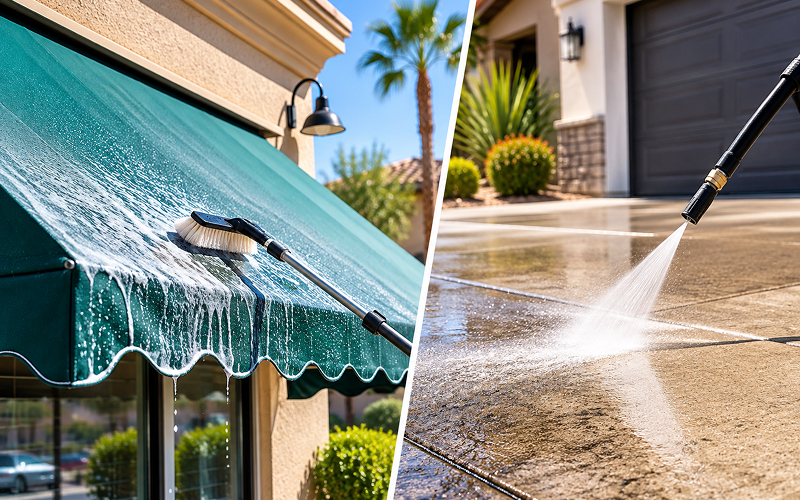
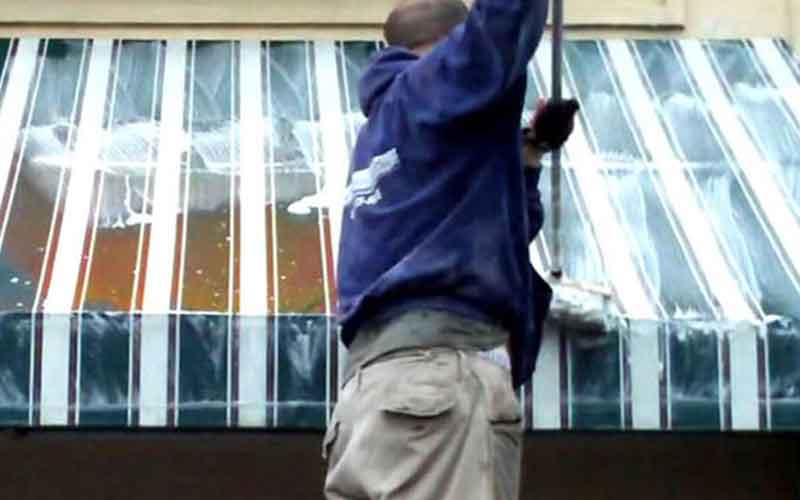
Light dusting and rinsing with mild soap and water is fine for routine upkeep. However, mildew removal, seam inspection, motor testing, and hardware checks are best left to a professional — pressure washing or harsh chemicals can void fabric warranties and accelerate UV damage.
What's the best time of year to schedule awning maintenance?
Spring (March–May) is ideal in both regions — it's after winter storms/dust settle and before peak summer UV and heat set in. Waiting until summer symptoms appear (stiffness, visible mildew, a hesitating motor) usually means the damage has already progressed past an easy fix.
Does a retractable awning last longer than a fixed one?
Generally yes. Retracting the awning during non-use hours limits cumulative UV exposure and wind stress, which is a major reason retractable systems often outlast fixed awnings of the same fabric grade — provided the motor and mechanical arms are inspected annually.
Summary
Spring awning maintenance is essential for homeowners and business owners across Los Angeles County and Nevada to prevent costly mid-summer breakdowns. Inspecting fabric, seams, retraction mechanisms, and mounting hardware early allows for low-cost repairs before extreme heat sets in. Environmental demands vary by region: LA properties face coastal humidity and mildew risks, while Nevada properties experience heavy UV exposure, dust accumulation, and fabric brittleness. Implementing an annual pre-summer maintenance checklist with The Awning Cleaners protects structural integrity and significantly extends awning lifespan.
Proactive Spring Inspection
Catching small tears, stiff joints, and loose seams in spring prevents mid-summer failures when shade is needed most.
Core Inspection Points
Systematically check fabric condition, seam stress, motorized/manual retraction mechanisms, mounting hardware, and surface buildup.
LA County Regional Focus
High risk of mildew and grime due to coastal humidity and marine layer moisture; early cleaning prevents heat from baking buildup into the fabric.
Nevada Regional Focus
High UV intensity and blowing dust accelerate fabric brittleness and seam separation; early checks catch material weakness before tears occur.
Long-Term ROI
Regular annual cleaning and hardware checks drastically extend awning life compared to reactive post-damage repairs.