
Quick Answer: Due to Nevada’s extreme solar radiation (over 3,800 annual sunshine hours) and alkaline dust accumulation, residential awnings require professional cleaning 2 to 3 times per year (Spring, Mid-Summer, and Late Fall). Commercial storefront awnings require bi-monthly cleaning (every 60 days) to prevent micro-abrasive fiber breakdown, eliminate airborne grease-dust bonding, and maintain clear storefront branding.
Introduction
If awnings could talk, they probably wouldn’t have many flattering things to say about Nevada.
Between the grit that never seems to settle and a sun that treats every afternoon like a personal challenge, this state is hard on outdoor fabric in ways most people don't realize until their once-bright awning looks permanently sun-bleached and dusty.
At The Awning Cleaners, serving homes and businesses across Nevada—including Las Vegas, Henderson, North Las Vegas, Summerlin, and Reno—this is the exact pattern we see on almost every property we visit for the first time.
The Dual Threat: How Desert Dust and UV Radiation Wear Down Awnings
1. The Mechanical Abrasion of Desert Dust
Dust is the obvious one.
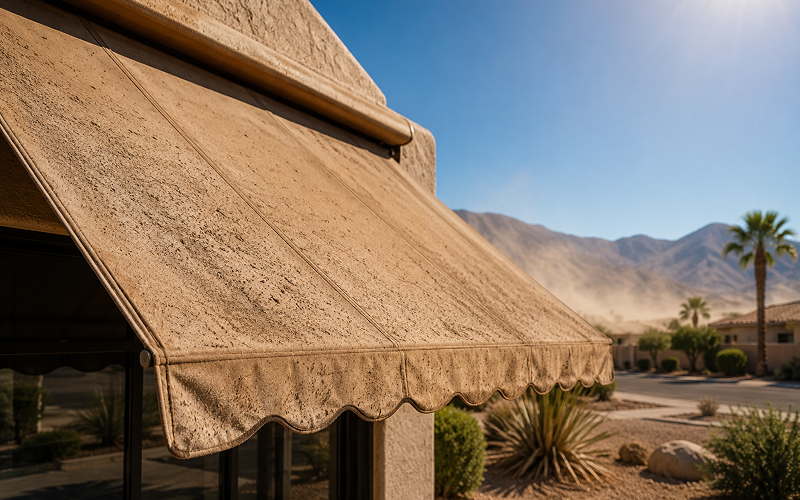
Nevada's dry, windy conditions mean that dust settles into fabric weave and vinyl seams, and unlike rain-washed climates, there's rarely enough natural rainfall here to rinse it back out on its own. Southern Nevada receives less than 4.2 inches of rainfall per year, completely lacking the natural "rinse cycle" found in humid regions.
Furthermore, Nevada dust isn't standard organic topsoil—it is heavily composed of silica, calcium carbonate, and alkaline salts. Left alone, these fine, sharp particles get lodged inside the micro-weaves of woven fabrics (like Sunbrella®) or along vinyl stress seams. Every time the wind picks up, this trapped grit grinds into the material like microscopic sandpaper, cutting thread fibers from the inside out.
2. Photo-Oxidative Breakdown from Extreme Sun Exposure
Sun is also the problem – but a quieter one.
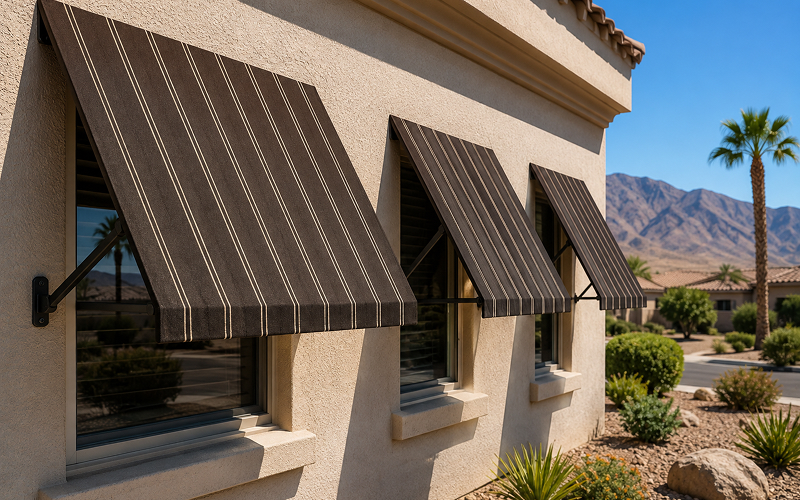
Nevada averages over 3,800 hours of direct sunlight annually, with summer UV index levels reaching 10 to 11+ (Extreme). Sustained UV exposure breaks down the fibers and coatings in the awning over time through photo-oxidation. UV rays sever the chemical bonds in waterproofing treatments, plasticizers (in vinyl), and structural stitching.
When combined with daily desert temperature swings of 30°F to 40°F, untreated materials undergo severe thermal shock. This is why an awning that’s never been cleaned doesn’t just look dirty, but starts to look faded, brittle, and thin in a way that regular washing can’t fully reverse once it has gone too far.
Awning cleaning in Nevada isn't optional maintenance here, the way it might be somewhere with a milder climate; it's what actually slows that damage down.
Nevada Climate Material Impact & Lifespan Profile
To illustrate how Nevada's micro-climates affect different shade materials, consider the baseline lifespan differences between maintained and unmaintained structures:
| Fabric/Material Type | Primary Nevada Threat | Lifespan Without Washing | Lifespan With Routine Care | Recommended Protection Protocol |
|---|---|---|---|---|
| Solution-Dyed Acrylic (e.g., Sunbrella) | Silica micro-abrasion & thread rot | 3–5 Years | 10–12+ Years | Bi-annual wash + fluoropolymer re-proofing |
| Laminated Commercial Vinyl | Plasticizer loss & heat cracking | 2–4 Years | 7–10 Years | Bi-monthly wash + UV-inhibitor conditioning |
| Polyester & Cotton Blends | Rapid UV fading & seam snapping | 1–2 Years | 4–5 Years | Quarterly washing + immediate spot treatment |
Key Damage Prevented by Routine Awning Maintenance
An awning that has been properly maintained holds its color and structural integrity for years longer than the one that’s been left to fend for itself.
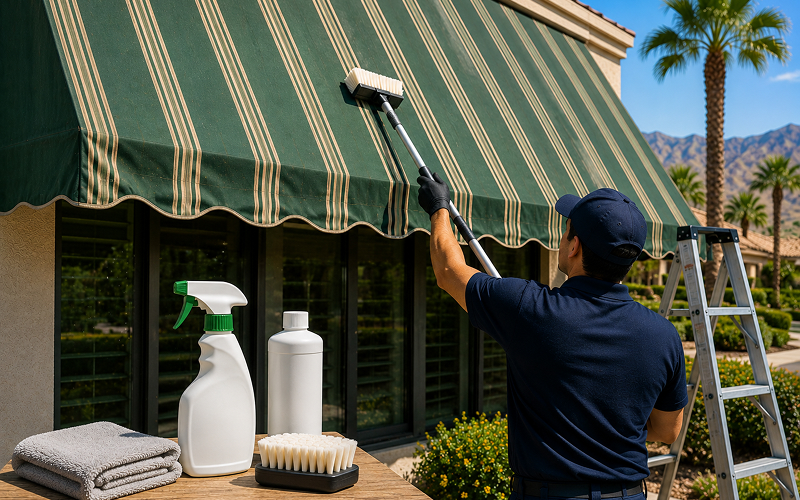
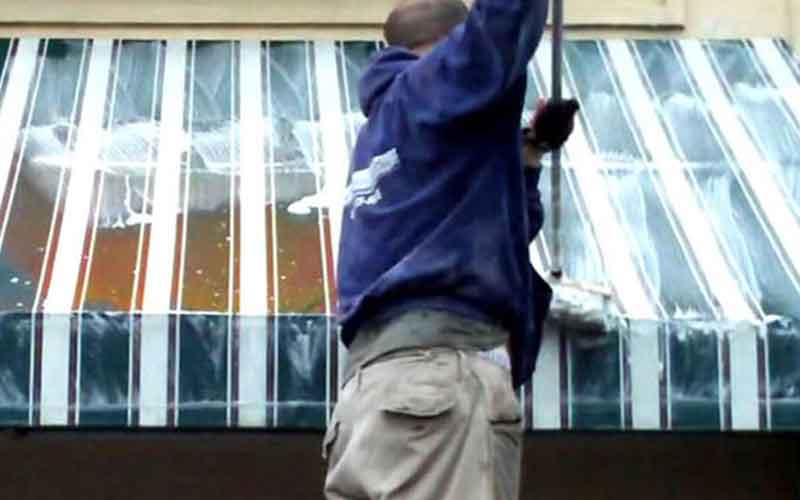
Routine vinyl awning cleaning and fabric awning washing remove the buildup before it has time to work into the material, which means less fading, fewer brittle spots, and a longer stretch before you're looking at repair or replacement instead of a simple wash.
Key structural benefits include:
- Eliminating Seam & Thread Rot: Fine dust holds corrosive atmospheric pollutants against tension stitching. Regular cleaning flushes these chemical agents out before seams tear.
- Stopping Desert Mildew Spores: Mildew is a surprising problem to spot in a desert climate, but any moisture that does collect—whether from lawn sprinkler overspray, morning dew, or a rare desert storm—sits in dust-clogged fabric long enough to grow. Because alkaline dust acts as an organic nutrient source, spores flourish in shade folds. If left unaddressed, learning how to remove mildew from awning fabric after the fact is a lot more work than preventing it with a regular wash in the first place.
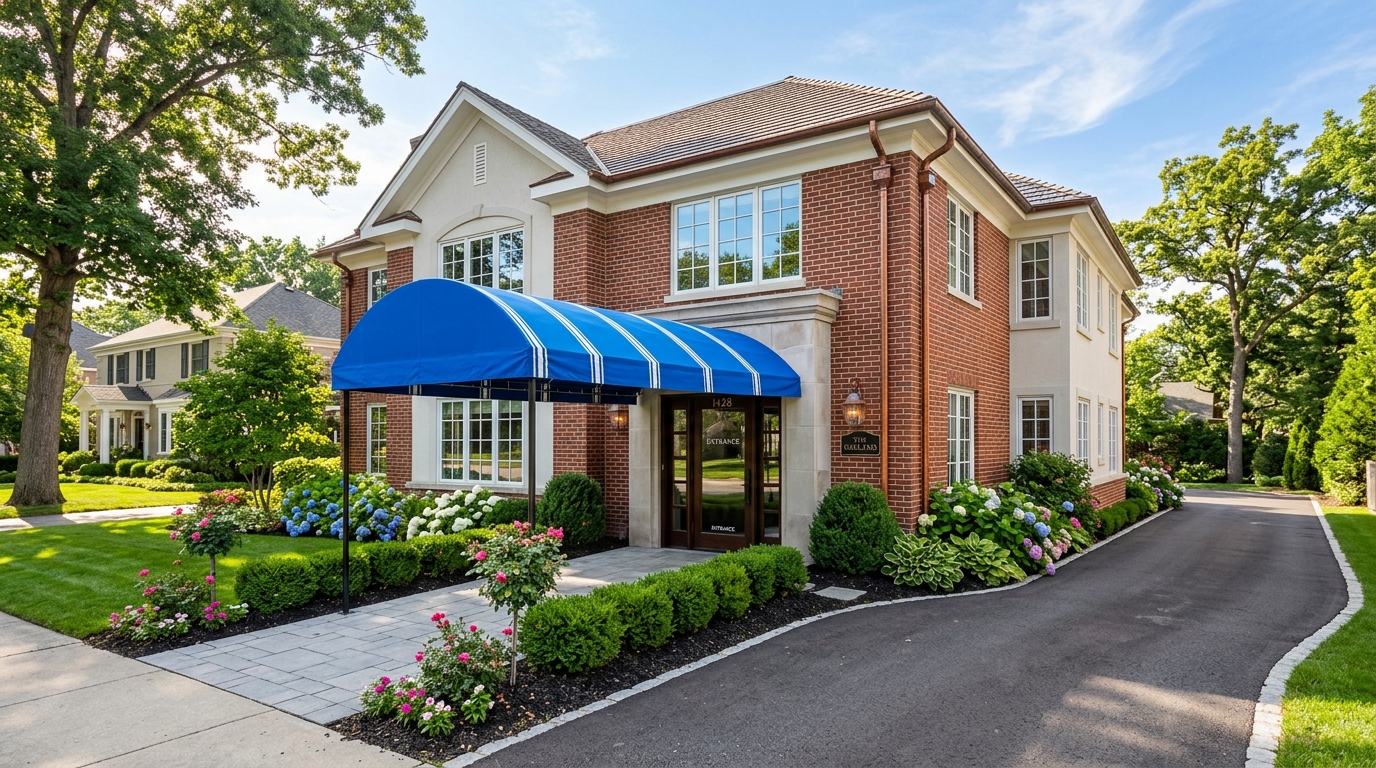
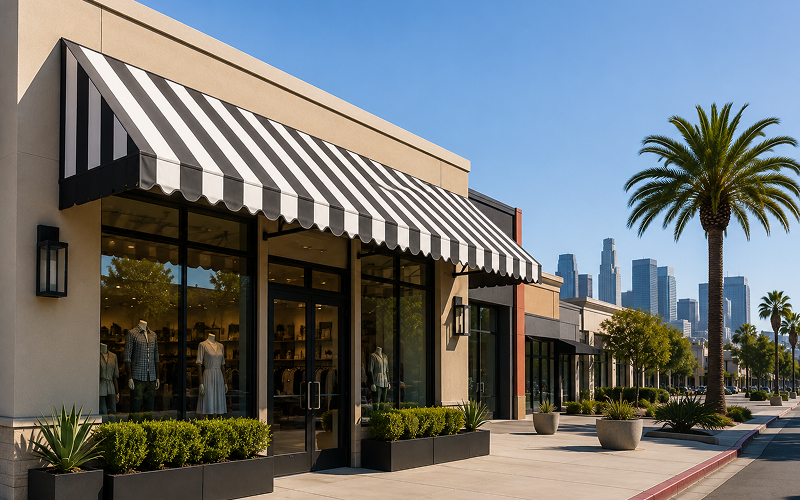
- Preserving Commercial Brand Equity: Storefront awnings function as 24/7 passive advertising. Research shows over 70% of consumers judge a business's internal quality based on exterior appearance. A chalky, dust-streaked sign over the door directly undercuts walk-in foot traffic every day it stays that way.
How Often Should You Clean Your Nevada Awning?
Cleaning schedules depend on property placement, local wind corridors, and nearby activity:
Nevada Awning Maintenance Schedule
| Property Type / Environment | Recommended Cleaning Months | Service Frequency |
|---|---|---|
| Commercial Storefronts | Jan, Mar, May, Jul, Sep, Nov | Bi-Monthly (Every 60 Days) |
| High-Dust / Construction Corridors | Feb, Apr, Jun, Aug, Oct, Dec | Bi-Monthly (6x / Year) |
| Standard Residential | Spring, Mid-Summer, Late Fall | 2–3x Per Year |
Residential Properties
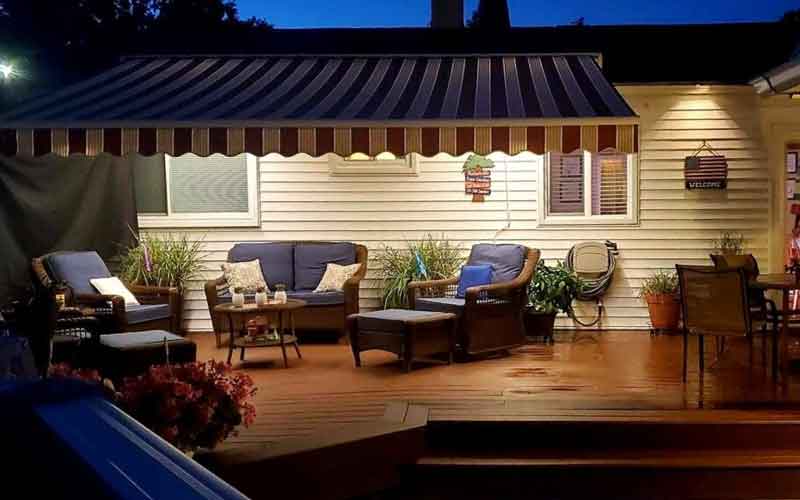
Most residential awnings hold up well with a thorough cleaning two or three times a year. More frequent cleaning may be necessary for properties located in heavy dust corridors, wind valleys, or near active construction zones (such as fast-growing areas in Summerlin, North Las Vegas, or Southwest Reno).
Commercial & Storefront Properties
Commercial and storefront awning cleaning usually needs a tighter schedule (bi-monthly or every 60 days). Restaurants and food service patios require strict monthly or bi-monthly care, as airborne kitchen grease bonds with desert dust to form a tough, adhesive crust that damages fabric if neglected.
Protecting Your Outdoor Fabric Investment Against Nevada's Extreme Climate
Installing a new custom residential or commercial awning in Nevada typically costs $15 to $40+ per square foot.
An awning that's cleaned regularly simply lasts longer, and it's a lot cheaper to maintain one than to wait until years of sun and dust have taken their toll. Routine washing and sealant re-applications yield up to a 300% extension in service lifespan, saving thousands of dollars in premature replacement costs.
If it's been a while since yours saw an actual wash instead of just rain that never came, now's a good time to change that.
Call The Awning Cleaners at (323) 273-3058, or request a free quote online.
Let's get your awning back looking – and holding up – the way it should.
Summary
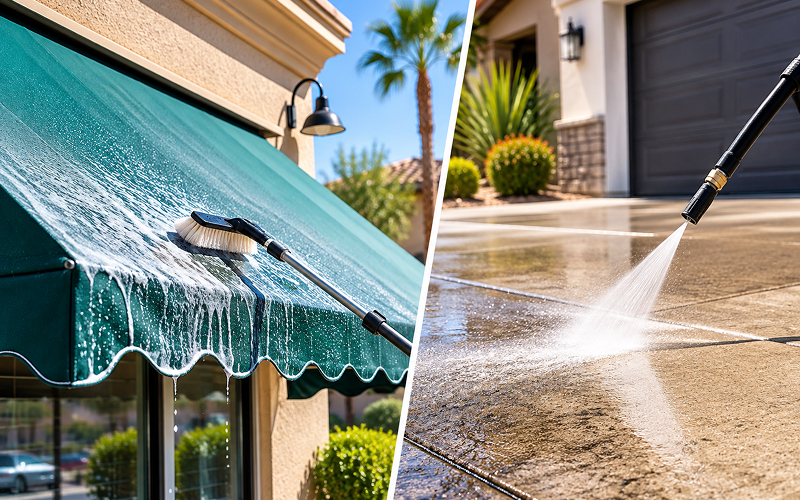
Nevada’s harsh desert environment subjects outdoor awnings to extreme UV exposure and persistent dust accumulation. Without natural rainfall to wash away debris, dry grit embeds deeply into fabric weaves and vinyl seams, causing abrasive friction during windy conditions. Simultaneously, unfiltered sun exposure breaks down protective chemical coatings, causing unmaintained awnings to become faded, brittle, and structurally compromised. Regular low-pressure cleaning removes embedded grit and prevents desert mildew, significantly extending the fabric's lifespan and structural integrity.
Abrasive Dust Degradation
High desert winds ground dry dust into fabric weaves and vinyl seams, wearing down material over time like fine sandpaper.
UV Coating Breakdown
Unfiltered sun exposure degrades protective chemical finishes, turning outdoor fabric brittle, faded, and thin.
Desert Mildew Risk
Sprinklers, morning dew, and rare rainstorms trap moisture in dust-clogged fibers, leading to stubborn mildew growth if not washed regularly.
Recommended Cleaning Frequency
Residential awnings require cleaning 2–3 times per year, while commercial storefront awnings demand a tighter schedule to maintain business branding.
Cost-Effective Preservation
Routine low-pressure washing prevents early fabric failure and is far cheaper than full awning replacement.