
Quick Answer : Small RV awning tears under 6 inches can be patched using waterproof, UV-rated vinyl or acrylic repair tape after cleaning the surface with isopropyl alcohol. However, major fabric tears, bent arm mechanisms, or spring tensioner failures require professional repair or full replacement. In Nevada's desert climate—where peak summer UV indexes reach 10 to 11+ and solar hours top 3,800 annually—unaddressed micro-cracks lead to complete fabric failure. Fabric-only replacement on an intact frame saves 40% to 60% compared to a complete awning assembly replacement.
Introduction
Your RV does a lot more work than it’s credited for.
It’s what gives you shade in a Nevada parking lot in the middle of July, protects you wherever you spend the night, and acts as a faithful barrier between you and every hailstone, storm, and overzealous gusts of wind without so much as a complaint.
So when it finally shows some signs of damage – that’s not betrayal. It’s just years of loyal service catching up to it. At The Awning Cleaners, serving Nevada and LA County RV owners across Las Vegas, Henderson, North Las Vegas, Summerlin, and Reno, we see it happen every season.
You notice the damage on your RV awning in bits and pieces. It could be a flap of fabric that’s frayed and seems to catch wind too easily, or a seam that has started to separate at the corner. One good gust off the highway outside Vegas, and suddenly what looked like a minor issue is now hanging by a thread, literally.
That's usually the moment people start searching for camper awning repair . An awning isn't decoration; it's the difference between a shaded patch of ground and a parking lot with no relief from the sun.
Identifying Common Types of RV and Camper Awning Damage
Before getting started fixing things, it helps to know what you’re looking at. Most RV awning damage falls into these 3 categories: a tear in the fabric itself, a problem with the arms or mechanism that extends and retracts it, or water damage that has been sitting unnoticed for quite some time.
Image File Name: rv-awning-failure-diagnosis-matrix-chart.jpg
Alt Text: RV awning failure diagnosis matrix showing UV fabric cracking, wind-bent arms, and trapped water seam rot.
Image Caption: RV awning failure diagnosis matrix outlining common environmental threats—extreme desert UV, highway wind gusts, and trapped storage moisture—and their mechanical impacts on camper awnings.
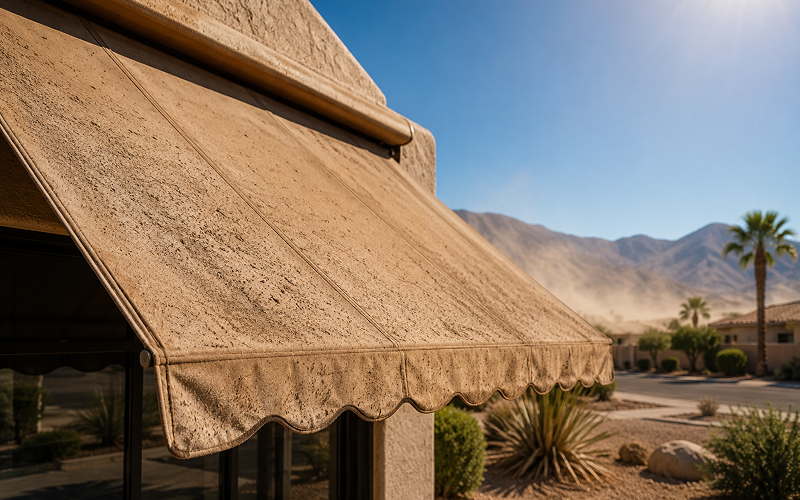
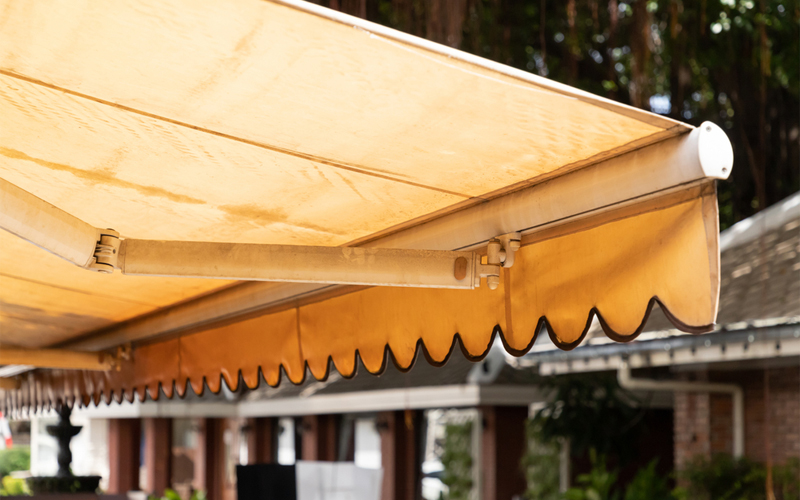
Nevada’s climate is especially harsh on awnings. The sun bakes vinyl until it's brittle, and the extreme stress from wide temperature swings between day and night (often shifting 30°F to 40°F in hours) quietly weakens the fabric over time. High highway winds combined with alkaline desert dust act like fine sandpaper along stress points. Most owners only realize how much damage has built up once a seam tears or the material finally splits.
Nevada Climate RV Awning Damage & Action Plan
| Damage Type | Primary Desert Cause | Can You DIY Patch It? | Estimated DIY Cost | Professional Repair / Replacement Cost |
|---|---|---|---|---|
| Small Tear (< 6 inches) | Debris impact or micro-fraying | Yes (UV-resistant repair tape) | $15 – $35 | $100 – $180 |
| Major Tear (> 6 inches) | Wind gusts or fabric rot | No (Patch will fail in desert heat) | N/A | $300 – $600 (Fabric Replacement) |
| Bent Extension Arms | Highway gusts or storm load | No (Structural integrity risk) | N/A | $250 – $500 (Hardware Repair) |
| Seam Separation | Thread rot & UV degradation | Temporary Only | $20 | $250 – $450 (Re-stitching/Fabric swap) |
| Stiff/Locked Roller | Torsion spring failure/rust | No (High spring tension danger) | N/A | $200 – $400 |
How to Patch Small RV Awning Tears Yourself
If the damage is minimal – like a small puncture or a clean tear under a few inches – an RV awning patch kit is genuinely worth trying before you call anyone.
Step-by-Step DIY Patch Protocol:
- Clean the Surface Thoroughly: Awnings pick up road grime, silica dust, and occasional mildew buildup quickly. Wipe down both sides of the damaged fabric with mild soap, followed by isopropyl alcohol to remove all oils.
- Measure & Cut Tape: Cut a piece of heavy-duty, UV-resistant vinyl/acrylic repair tape (such as Tear-Aid® Type A or B) allowing at least 1.5 inches of overlap on all sides of the tear. Round the corners of the tape with scissors to prevent peeling.
- Apply & Press: Lay the fabric on a flat surface or hold a rigid backing board behind it. Apply the patch smoothly, pressing out all air bubbles working from the center outward.
- Patch Both Sides: For structural longevity in Nevada heat, apply an identical patch to the underside of the fabric.
- Cure Time: Give the patch at least 24 hours to cure before retracting or extending the awning.
It's a fine fix for something that happened last weekend. It's not a fix for something that's been slowly failing for two seasons.
Handling Major Fabric Damage, Bent Arms, and Roller Issues
You are in for a bigger but solvable challenge when it comes to larger tears, a snapped arm, a roller tube that won’t retract smoothly, or a stiffened and cracked fabric from excessive heat.
Image File Name: nevada-rv-awning-repair-decision-flow-chart.jpg
Alt Text: Nevada RV awning repair decision flow chart showing when to apply a UV patch versus replacing fabric or the full assembly.
Title Attribute: Nevada RV Awning Repair Decision Flow Chart
Image Caption: Figure: Nevada RV Awning Repair Decision Flow — Evaluating tear size and frame condition to determine DIY patching, fabric-only replacement, or full assembly swap.
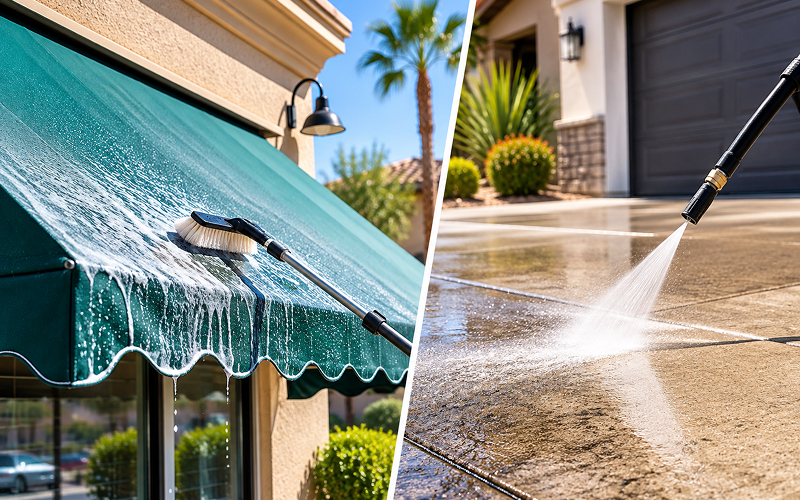
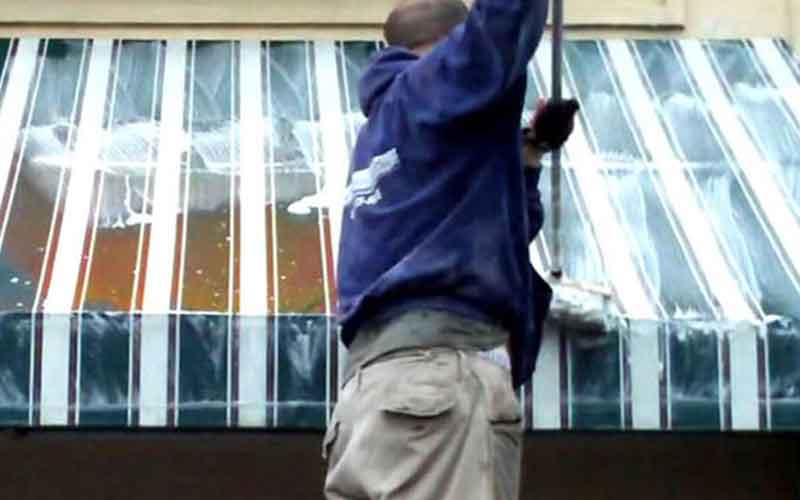
Cleaning an RV awning properly means using mild soap, a soft brush, and avoiding a high-pressure washer aimed directly at the seams, which can restore the fabric pretty quickly – especially the parts that still have some life left in them. High-pressure water can easily strip waterproofing coatings and snap dry, sun-baked threads.
Cleaning makes it obvious which parts are damaged and which parts are just dirty. Skipping this step means just guessing what needs to be fixed instead of actually knowing.
When to Call Professional RV Awning Repair Specialists
Now comes the slightly dreaded part – probably the one you feel like avoiding. But don’t.
If you’re looking at a mechanism you don’t recognize or understand, a broken torsion spring inside the roller tube (which holds high mechanical tension and can cause severe injury if improperly handled), or a tear too big for a patch to handle properly, then it’s time to call in a professional. Trying to fix it on your own can make it worse.
A rushed DIY fix on a torn or bent awning often costs more to undo than it would have to repair the first time. Professional technicians can perform fabric-only replacements, saving you 40% to 60% over replacing the entire roller and arm assembly.
Protecting Your Camper Awning Against Nevada Summer Heat
Most awning damage is manageable if you catch it early and know which fixes are actually DIY-friendly. But a good rule of thumb still applies: small tear, patch it; bent arm or major tear, call in help.
Preventive Care for Desert RVers:
- Deep Clean 2-3x Annually: Flush out abrasive silica sand and dust before rolling the awning into long-term storage.
- Apply UV & Waterproofing Sealants: Coat acrylic fabrics with fluoropolymer water repellents every 12 months to block solar degradation.
- Always Retract in High Winds: Never leave your awning extended unattended in Nevada, where sudden 30+ mph wind gusts can snap support arms in seconds.
Either way, don't let a damaged awning sit through another Nevada summer. Heat and UV exposure only make small problems bigger.
The Awning Cleaners has handled camper awning repair, fabric replacements, deep cleaning, and sealants across Nevada (Las Vegas, Henderson, North Las Vegas, Summerlin, Reno) and LA County long enough to know the difference between a quick patch job and a real replacement. Book an appointment now .
Frequently Asked Questions
Can I patch an RV awning tear myself in Nevada?
Yes, tears under 6 inches can be patched using heavy-duty, UV-resistant vinyl or acrylic repair tape after cleaning the surface with isopropyl alcohol. However, large tears or seam separations in extreme desert heat usually require professional fabric replacement.
How much does it cost to repair vs. replace an RV awning in Nevada?
DIY patch kits cost between $15 and $35. Professional fabric-only replacements typically range from $300 to $600, while full assembly replacements or bent hardware repairs range from $250 to $500+.
Why does Nevada's climate ruin camper awnings so quickly?
Nevada experiences over 3,800 hours of direct sun annually with summer UV indexes reaching 10 to 11+. High solar exposure causes photo-oxidation and brittleness, while 30°F–40°F daily temperature shifts and silica dust accelerate micro-abrasions along seams.
Is it safe to replace an RV awning torsion spring on my own?
No. Torsion springs inside the roller tube are under extreme mechanical tension and can cause severe injury if released improperly. Spring tensioner or mechanism failures should always be handled by a professional.
How often should I clean and seal my RV awning in Nevada?
You should deep clean your awning 2 to 3 times per year to wash away abrasive silica sand and dust. Re-apply a fluoropolymer UV and waterproofing repellent every 12 months to protect against sun bleach.
Summary
RV and camper awnings in Nevada face severe degradation from extreme summer heat, intense UV exposure, and heavy wind gusts. Common awning issues include small fabric punctures, seam separation, brittle/cracked vinyl, bent arms, and malfunctioning roller tube mechanisms. While minor tears under a few inches can be fixed using an RV awning patch kit after thorough cleaning, larger structural issues—such as snapped support arms, motor failures, or widespread heat damage—require professional repair or fabric replacement. The Awning Cleaners provides expert camper awning inspection, repair, and replacement services across Nevada to ensure maximum outdoor shade and protection.
Nevada Climate Impact
High UV radiation and wide day-to-night temperature swings bake vinyl and acrylic fabrics, making them brittle and prone to sudden splitting.
DIY Patch vs. Professional Repair
Small punctures and minor tears (under a few inches) are easily fixed with self-adhesive patch kits; bent arms, roller tube issues, and large tears demand professional intervention.
Critical Pre-Repair Cleaning
Cleaning the awning surface with mild soap and a soft brush—avoiding direct high-pressure washing on seams—reveals whether fabric is permanently damaged or merely dirty.
Risks of Unaddressed Damage
Prolonged exposure to Nevada heat accelerates minor fraying into full structural tears, while improper DIY fixes often increase overall replacement costs.
Mechanic & Hardware Safety
Snapped support arms and stubborn retraction mechanisms pose safety hazards and should be handled by experienced technicians.