
Quick Answer : External window awnings reduce interior solar heat gain through glass by up to 77% on west-facing windows and 65% on south-facing exposure, lowering summer cooling costs by 15% to 25%. In Nevada’s desert climate (where glass surface temperatures can exceed 130°F), external shade prevents heat from passing through window frames before it enters the home. Solution-dyed acrylic fabrics and wind-rated fixed or heavy-duty retractable frames yield the longest lifespan against Nevada’s extreme UV index (10+) and desert wind gusts.
Introduction
Nevada’s summers leave you no option but to adapt. It arrives quickly and stays for months.
If you've ever stood in a west-facing room at four in the afternoon wondering why the air conditioning can't keep up, the answer is usually sitting right there in the window, letting in more sun than any thermostat can fight.
At The Awning Cleaners, serving homeowners across Nevada—including Las Vegas, Henderson, North Las Vegas, Summerlin, and Reno—this is one of the most common calls we get once temperatures start to climb.
Why Nevada Homeowners Need External Window Awnings
A window awning can be there just for decorative purposes in milder climates. But that isn’t the case for Nevada. Here, it’s doing some real work.
The Thermal Science of Window Heat Gain
Standard window glass acts like a heat conductor. In Southern Nevada, direct afternoon sun can heat exterior glass surfaces to over 130°F.
- Interior vs. Exterior Shade: Interior blinds, cellular shades, or drapes only catch solar radiation after it has already penetrated the glass pane. The heat gets trapped between the glass and the blind, radiating directly into your living space.
- Stopping Heat Before Exposure: According to building thermal data, exterior window awnings block up to 77% of solar heat gain on west-facing exposure and 65% on south-facing windows before radiant energy touches the glass.
Blocking direct sunlight before it hits the glass keeps a room noticeably cooler than curtains or blinds ever can, since it stops the heat outside rather than trapping it indoors. Homeowners who add an awning for window openings on the sun-facing side of the house often notice the difference in their next few energy bills—saving 15% to 25% on peak summer AC usage—not just in overall comfort.
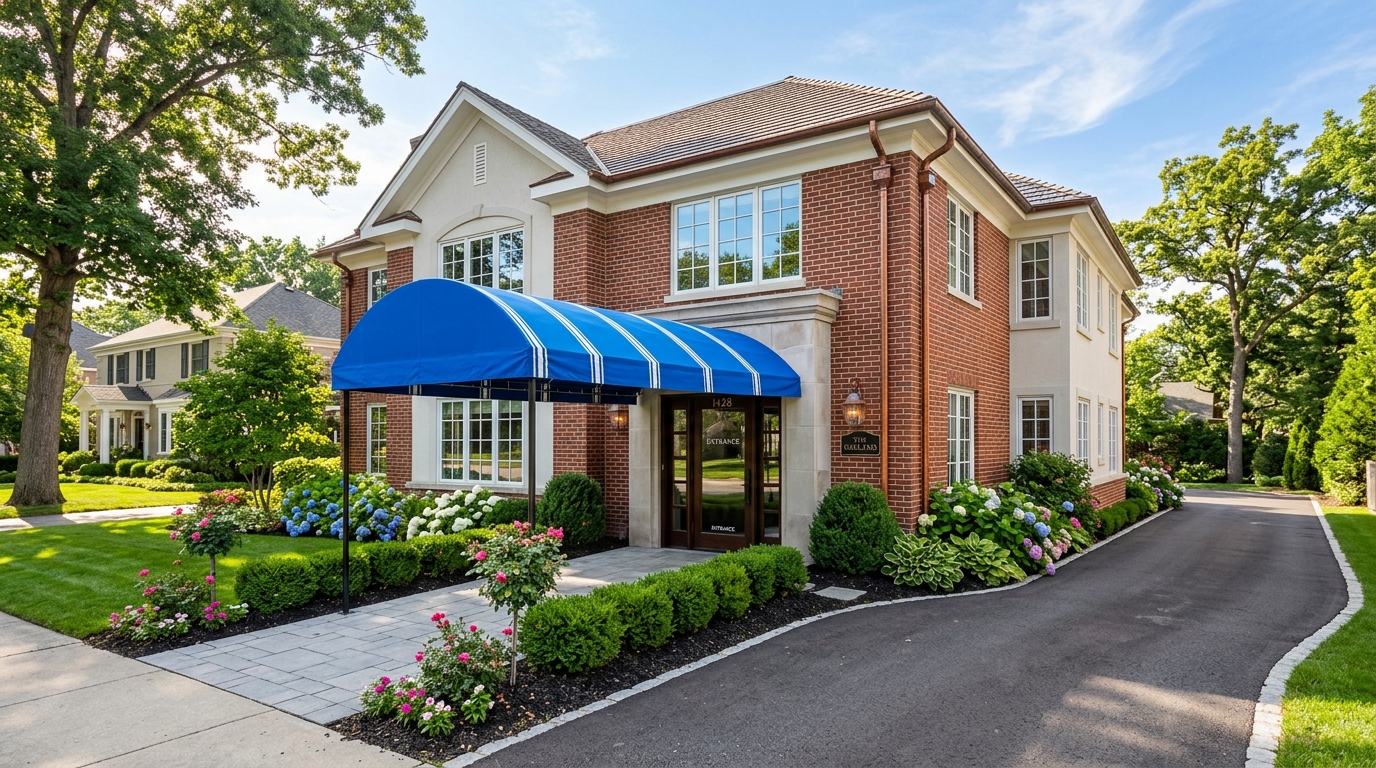
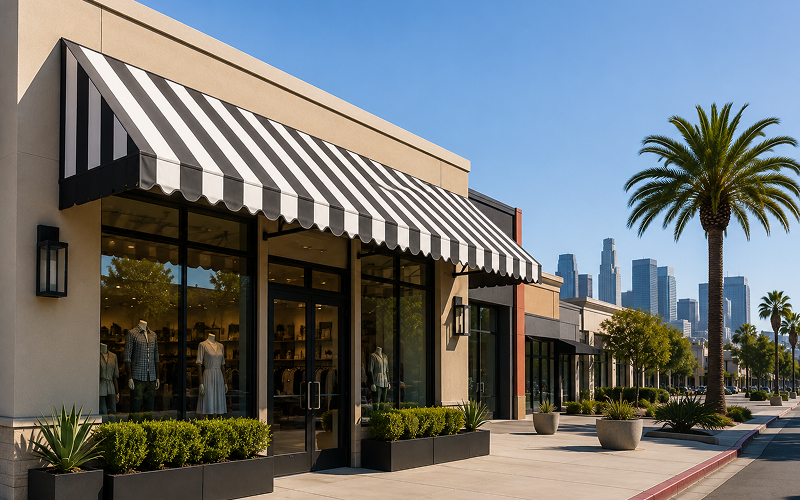
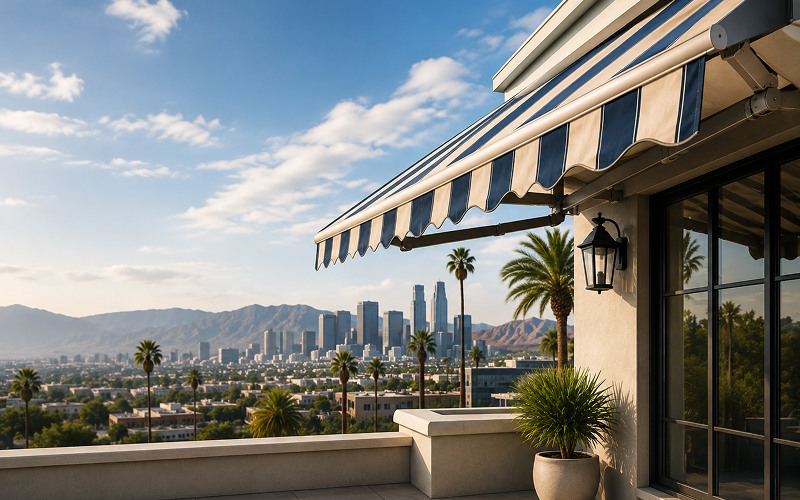
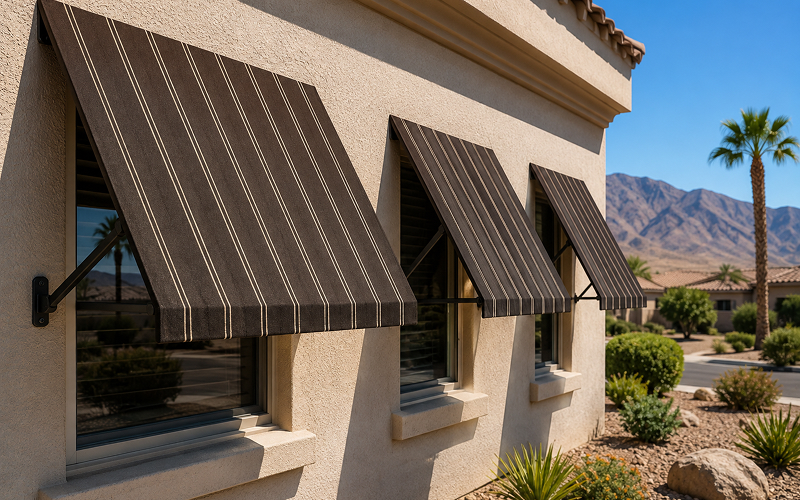
Image Caption: Exterior window awnings block up to 77% of solar heat gain before it penetrates the glass pane, lowering AC energy loads by 15% to 25% during peak Nevada summer heat.
Comparing Window Awning Styles: Fixed, Retractable, and Continuous
Not every window calls for the same look or structural footprint. Understanding how different styles perform in Nevada's dry climate helps match the right frame to your home's orientation:
| Awning Style | Best Window Placement | Nevada Wind Resilience | Maintenance Level | Estimated Lifespan (Nevada Climate) |
|---|---|---|---|---|
| Fixed Window Awning | West & South individual windows | High (Stays rigid during gusts) | Low (Regular bi-annual cleaning) | 10–12+ Years (with frame maintenance) |
| Retractable Awning | Multi-season windows, patios | Medium (Must retract during high wind) | Medium (Motor, arms & fabric care) | 8–10 Years (fabric wash + mechanical check) |
| Continuous Awning | Multi-window walls, storefronts | High (Architecturally anchored) | Low to Medium | 10–12+ Years |
- Fixed Awnings: A fixed window awning provides permanent, structured shade over a single window and holds up well with minimal upkeep. So, no moving parts, no adjusting, just steady coverage in the same spot year-round.
- Retractable Awnings: Retractable window awnings let you extend the shade only when the sun demands it, then retract it when you want more light or prefer an open window.
- Continuous Awnings: For homes with several windows on the same exposed wall, a continuous awning across that whole side often looks more intentional than a row of individual pieces.
Key Factors to Consider Before Installing a Nevada Window Awning
Before you choose window awnings for your home in Nevada, it’s worth thinking about more than the fabric colour.
1. Wind Load & Frame Hardware
Wind exposure matters. In high-wind corridors like Summerlin, Henderson's foothills, or North Las Vegas, afternoon desert winds can frequently gust up to 30–40 mph. A lightweight retractable awning can work in sheltered areas, but gusty lots need sturdier hardware with reinforced mounting brackets or automatic wind sensors.
2. Fabric Composition & UV Resistance
Material matters too, since Nevada's solar load averages over 3,800 hours of direct sun annually with a summer UV Index of 10 to 11+. Low-grade vinyl or untreated cotton-polyester blends fade and crack rapidly under high UV levels.
- Solution-Dyed Acrylics (e.g., Sunbrella®): Colors are locked into the fiber core during production, resisting UV fading for 10+ years.
- Coated Commercial Vinyls: Ideal for high-moisture/grease zones, but requires regular UV-inhibitor treatment to prevent heat cracking in desert environments.
Investing a slightly higher upfront cost in quality material usually outlasts a budget option by years, not months.
Window Awning Fabric Replacement vs. Full System Installation
An older awning that's faded, sagging, or cracked is more than just a cosmetic problem. It stops doing the job it was installed for in the first place, allowing heat to leak through worn fabric fibers.
Alt: Nevada Awning Asset Management Protocol decision tree showing fabric replacement saves 40-60 percent if structural frame is intact
Image Caption: Nevada Awning Asset Management Protocol — Evaluating frame integrity vs. full replacement.
Window awning replacement in Nevada is often less complicated than people expect, especially when the existing frame is still solid, and only the fabric or canopy needs to go. Replacing just the fabric skin typically saves 40% to 60% compared to a full frame and structural installation.
It's advisable to have someone take a look before assuming the whole structure needs to come down.
Regional Care & Preservation in Nevada
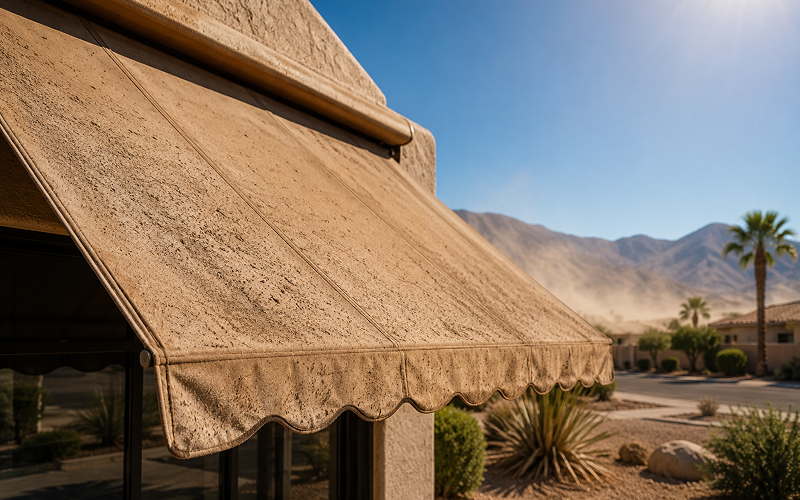
Whether you choose fixed or retractable window awnings, Nevada's alkaline dust (silica and calcium) combined with rare rainfall means natural rinsing won't happen.
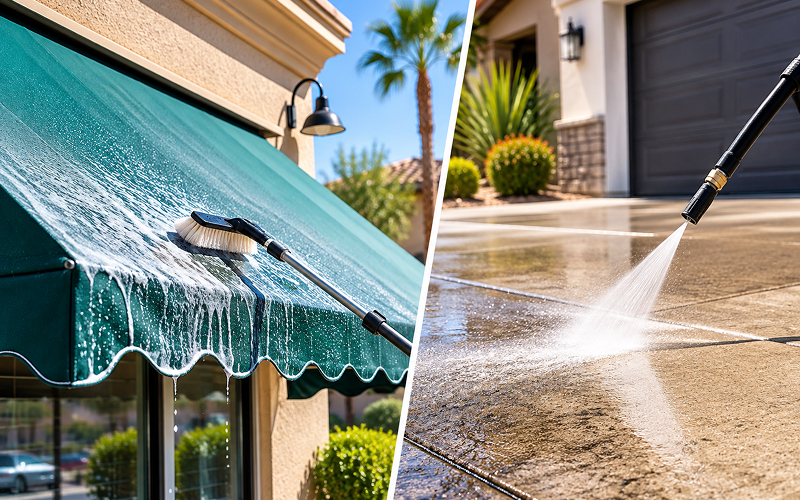
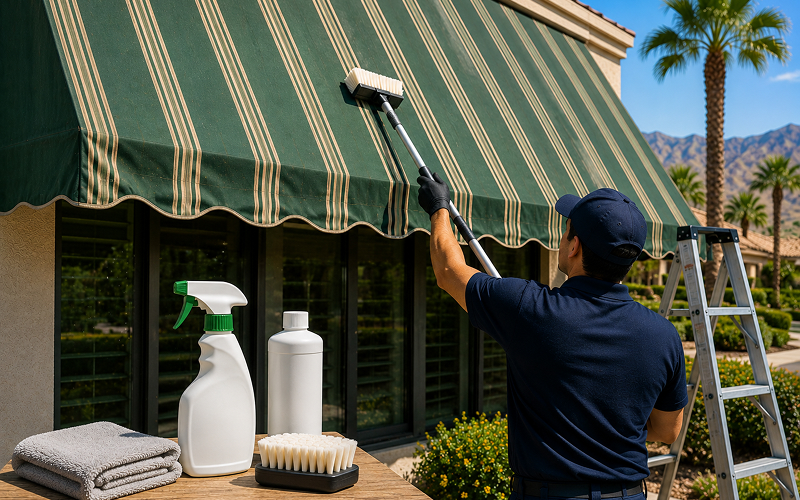
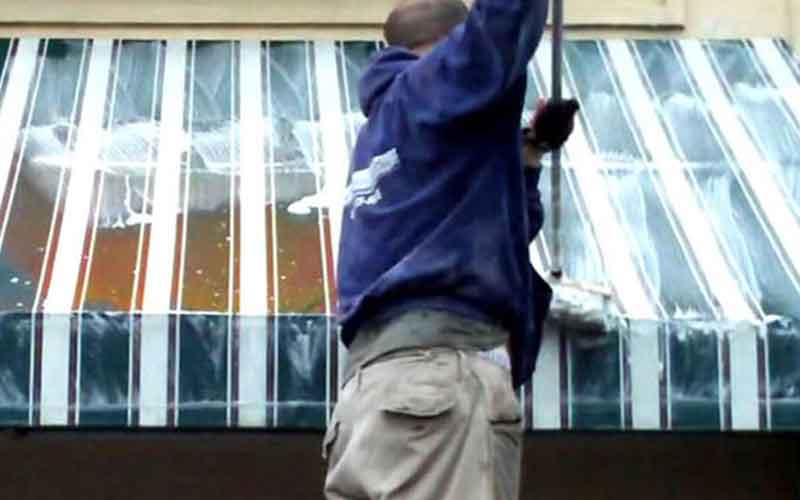
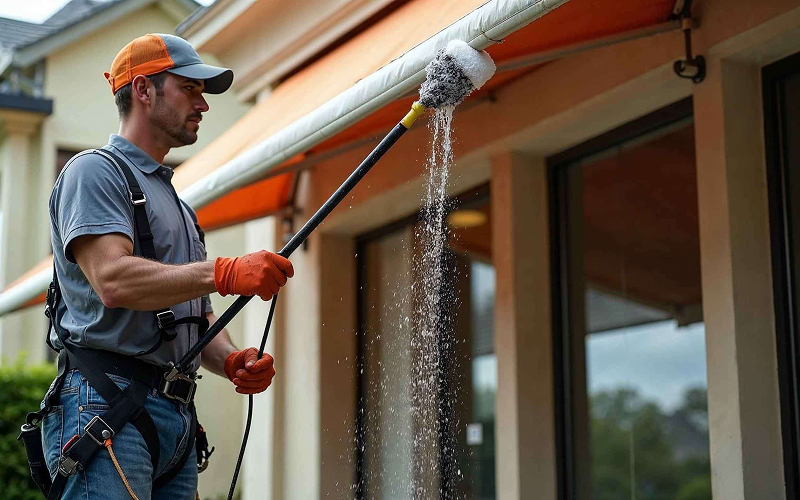
- Residential Cleaning Frequency: Deep wash 2 to 3 times per year (Spring, Mid-Summer, Fall) to clear fine silica dust from fabric weaves before wind causes micro-abrasions.
- Sealant Application: Re-apply fluoropolymer waterproofing and UV protection every 12 to 18 months to maintain fabric integrity against sun bleach.
Cool Your Home with The Awning Cleaners
A well-chosen window awning is one of the simplest upgrades that actually changes how a room feels, not just how the house looks from the street. If a window in your home has been fighting the sun all on its own, it's time to give it some backup.
The Awning Cleaners provides expert awning maintenance, cleaning, sealants, and fabric replacement across Las Vegas, Henderson, North Las Vegas, Summerlin, and Reno. Book an appointment now.
Frequently Asked Questions
How much do exterior window awnings reduce indoor temperatures in Nevada?
Exterior window awnings block up to 77% of solar heat gain on west-facing windows and 65% on south-facing windows. By stopping heat before it passes through the glass pane, awnings lower summer cooling loads and AC costs by 15% to 25%.
Which awning fabric lasts longest in the Nevada desert sun?
Solution-dyed acrylic fabrics (such as Sunbrella®) last the longest, holding up for 10+ years. Because pigment is locked into the fiber core during manufacturing, acrylic resists severe fading and cracking caused by Nevada’s extreme summer UV index (10+).
Can window awnings handle high desert winds in Las Vegas and Henderson?
Yes, but frame selection matters. Fixed window awnings offer the highest wind resilience during 30–40 mph desert gusts. Retractable awnings can also be used if paired with reinforced hardware, heavy-duty arms, or automatic wind sensors that retract the canopy when wind picks up.
Is it cheaper to replace awning fabric or install a whole new system?
Replacing just the fabric canopy on an existing, undamaged frame typically saves 40% to 60% compared to a complete frame and structural installation.
How often should window awnings be cleaned in Nevada?
Residential window awnings in Nevada should be deep cleaned 2 to 3 times per year (Spring, Mid-Summer, and Fall) to wash away silica dust and prevent micro-abrasion. A fluoropolymer waterproofing and UV sealant should be re-applied every 12 to 18 months.
Summary
Window awnings serve as a crucial first line of defense against Nevada’s extreme summer heat and harsh UV rays. By blocking solar radiation before it hits glass surfaces, window awnings prevent indoor heat trapping, lower cooling costs, and reduce strain on air conditioning systems. The Awning Cleaners provides expert fixed and retractable window awning installations, frame repairs, and fabric replacements for Nevada homeowners, offering custom shade solutions built to withstand heavy wind exposure and high-UV desert climates.
Superior Heat Prevention
Blocks direct sunlight outside the glass, delivering far better cooling efficiency than interior blinds or curtains.
Energy Bill Savings
Dramatically cuts air conditioning workload during peak summer months, lowering overall energy costs.
Versatile Shade Styles
Choose between low-maintenance fixed awnings, adjustable retractable awnings, or seamless continuous wall coverage.
Desert-Durable Materials
Built using high-grade, UV-resistant fabrics and sturdy hardware engineered to endure Nevada's high winds and intense sun.
Cost-Effective Fabric Replacement
Complete structure tear-downs are often unnecessary; existing solid frames can simply be recovered with new canvas/fabric.